

npj Biofilms and Microbiomes: Gut-Lung Regulatory Pathway—Cloud-Clone Spermidine ELISA Kit Empowers Mechanistic Research

Probiotic-derived cinnamic acid drives anti-asthma effects independent of resident gut microbiota
HUSTON, TX, UNITED STATES, September 10, 2026 /EINPresswire.com/ -- Allergic asthma remains a major clinical challenge with limited curative therapies. Interconnected molecular cascades underlying the gut-lung axis have long been difficult to fully characterise. A study published in npj Biofilms and Microbiomes in July 2026 uncovers a complete cinnamic acid-STAT1-SAT1-spermidine-eIF5A gut-lung signalling axis. Notably, the probiotic strain exerts therapeutic effects without relying on the host’s native gut microbiota. Cloud-Clone’s spermidine ELISA kit delivered robust high-throughput quantification of the key metabolite to support this mechanistic investigation.
Allergic asthma lacks definitive curative treatment options, and reconstructing full molecular chains within the gut-lung axis has posed substantial experimental barriers. Researchers from the National Institute for Communicable Disease Control and Prevention mapped the novel gut-lung regulatory axis through multi-stage animal and cellular experiments. Their work further demonstrates that the probiotic’s protective activity does not require pre-existing gut commensal microbes.
Article details
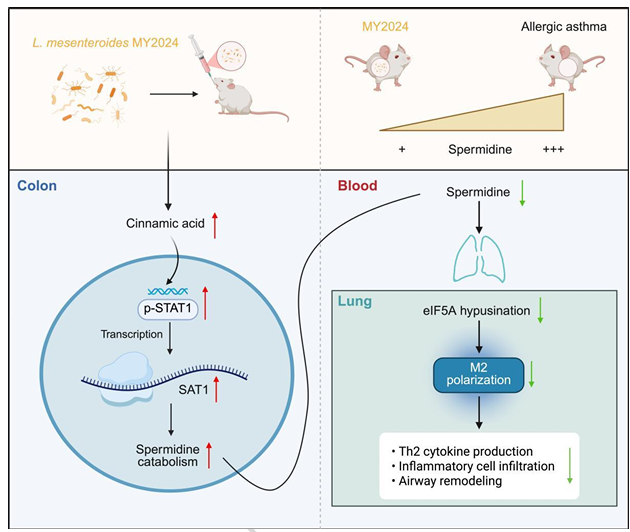
Title: Gut-derived cinnamic acid limits allergic airway inflammation via the SAT1-spermidine-eIF5A hypusination axis Journal: npj Biofilms and Microbiomes, 2026 DOI: 10.1038/s41522-026 Test strain: Leuconostoc mesenteroides MY2024 (CGMCC No. 30904) Animal model: OVA-induced type 2 allergic airway (eosinophilic asthma) model in BALB/c mice Core regulatory pathway: Viable probiotic secretes cinnamic acid → activates colonic STAT1-SAT1 signalling → accelerates systemic spermidine degradation → reduces pulmonary eIF5A hypusination → suppresses M2 pro-inflammatory macrophages → alleviates airway inflammation and remodelling.
The research team completed their work in six sequential experimental phases.
Phase 1: Verification of probiotic efficacy and identification of active metabolites OVA-challenged asthmatic mice were separated into viable-bacteria group, heat-killed-bacteria group and PBS control group. Flow cytometry, cytokine profiling and histopathological readouts confirmed that only live MY2024 significantly reduced pulmonary eosinophils and CD4⁺IL4⁺ Th cells, lowered serum IgE as well as lung-tissue IL-4/IL-5/IL-13, and mitigated airway collagen deposition. Heat-inactivated probiotics showed negligible anti-inflammatory capacity. These results indicated that small-molecule metabolites secreted by viable bacteria mediate therapeutic benefits.
Phase 2: Identification of M2-like alveolar macrophages as key effector cells After depleting mouse macrophages with clodronate liposomes, probiotic-driven anti-inflammatory protection was completely abolished. Flow cytometry, immunofluorescence and gene-expression analysis demonstrated that live probiotics down-regulated the proportion of CD206-positive M2 macrophages and decreased expression of M2 markers including Arg1, Fizz1 and Ym1. Inhibition of M2-macrophage activation was therefore established as the core anti-inflammatory mechanism for MY2024.
Phase 3: Targeting spermidine as a central mediator via metabolomics and Cloud-Clone ELISA screening Untargeted metabolomics highlighted prominent shifts within arginine-polyamine metabolic pathways. All serum samples across experimental groups were measured in batches using the Cloud-Clone spermidine ELISA kit. Elevated serum spermidine was detected in OVA-model animals, while viable-probiotic intervention markedly decreased spermidine concentrations. Exogenous spermidine supplementation via drinking water fully reversed the probiotic-related anti-inflammatory and macrophage-suppressing phenotypes. This evidence established circulating spermidine accumulation as a critical pro-inflammatory driver in allergic asthma.
Phase 4: Dissecting downstream signalling triggered by spermidine Spermidine serves as the exclusive substrate for eIF5A hypusination. The DHPS inhibitor GC7 was applied to block this post-translational modification. GC7 treatment alone reproduced all protective effects of the probiotic, and combining GC7 with viable bacteria yielded no additive anti-inflammatory outcomes. This finding verified that eIF5A hypusination represents the sole pro-inflammatory effector downstream of spermidine.
Phase 5: Novel validation: probiotic function independent of indigenous gut microbiota Mice were pre-treated with broad-spectrum antibiotic cocktails to deplete endogenous commensal bacteria. Serum spermidine levels were again quantified with Cloud-Clone ELISA assays. Even after microbiota depletion, live MY2024 still reduced circulating spermidine, repressed M2-macrophage responses and eased airway inflammation, whereas heat-killed bacteria remained ineffective. This confirms that the probiotic releases bioactive metabolites directly, making it potentially suitable for asthmatic individuals receiving long-term antibiotic therapy or living with gut dysbiosis.
Phase 6: Tracing upstream signalling molecule--cinnamic acid Analysis of polyamine-metabolising enzymes in colon tissue revealed selective SAT1 up-regulation triggered by viable probiotics. Metabolite profiling of bacterial culture supernatants identified cinnamic acid as the signature strain-derived metabolite. In-vitro assays on HT2 colonic epithelial cells showed dose-dependent STAT1 phosphorylation and SAT1 up-regulation upon cinnamic acid exposure. In-vivo inhibition of SAT1 (DIZE) or STAT1 (fludarabine) abrogated cinnamic acid-mediated spermidine lowering and inflammation relief, closing the full upstream-to-downstream signalling chain.
Complete signalling cascade: Live MY2024 probiotic → cinnamic acid secretion → activation of colonic epithelial STAT1-SAT1 axis → accelerated systemic spermidine breakdown → reduced blood spermidine → diminished pulmonary eIF5A hypusination → suppressed M2-macrophage polarisation → reduced Th2-related cytokines, attenuated inflammatory infiltration and airway remodelling.
Figure 1 Image credit: npj Biofilms and Microbiomes
The graphical abstract illustrates this regulatory axis:
1.Oral live MY2024 colonises the colon and continuously produces cinnamic acid; heat-killed bacteria fail to generate cinnamic acid and cannot initiate the pathway.
2.Within colon tissue, cinnamic acid promotes STAT1 phosphorylation and increases SAT1 abundance to boost spermidine catabolism. Cloud-Clone ELISA provides precise quantification of resulting shifts in blood spermidine concentration.
3.Spermidine travels through circulation to the lungs. Higher systemic spermidine correlates with aggravated M2-macrophage infiltration and asthma-related inflammation.
4.Lower spermidine levels reduce eIF5A hypusination in lung tissue, restraining M2-macrophage activation and alleviating Th2-cytokine release, immune-cell infiltration and airway fibrosis.
5.Notably, the entire regulatory cascade remains functional even after antibiotic-mediated removal of native gut microbiota.
Cloud-Clone Spermidine Small-Molecule Competitive ELISA Kit Overview
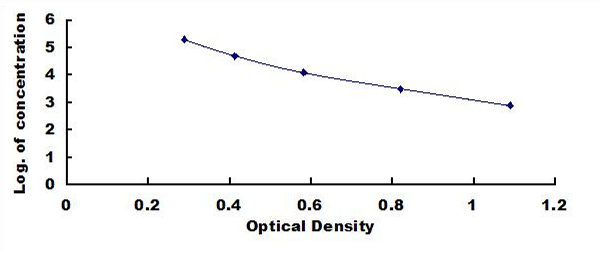
This competitive ELISA kit is optimised for mouse-serum spermidine quantification, supporting high-throughput measurement of polyamine metabolites. Tested sample sources include serum collected from healthy controls, OVA-asthma models, live-bacteria / heat-killed-bacteria interventions, antibiotic-pre-treated animals, and cohorts receiving cinnamic acid, DIZE or fludarabine treatments.
Figure 2 ELISA KIT for Spermidine
Quantitative outputs generated by Cloud-Clone’s kit form key causal evidence for this publication:
1.Confirms spermidine elevation in OVA-induced asthmatic mice and significant reduction following viable-probiotic treatment.
2.Validates that cinnamic acid enhances spermidine degradation via SAT1; SAT-inhibitor DIZE restores serum spermidine concentrations.
3.Demonstrates that MY2024 can still lower serum spermidine after antibiotic clearance of commensal microbes.
4.Provides supporting evidence that exogenous spermidine counteracts the probiotic’s anti-inflammatory protection.
Figure 3. Spermidine reduction is associated with MY2024-mediated suppression of M2
associated macrophage responses in AAI mice. (D-E) Targeted metabolomics analysis of spermidine levels in serum and colonic contents.
Key innovations from the study
1.Establishes a complete gut-lung metabolic-immune cascade connecting probiotic activity, intestinal metabolites, systemic small-molecule signalling and pulmonary immune cells, with reciprocal rescue validation both in-vitro and in-vivo.
2.The probiotic exerts therapeutic effects independent of host commensal microbiota, broadening applicability for asthmatic patients under antibiotic exposure or suffering from gut dysbiosis.
3.Identifies SAT1 and eIF5A hypusination as original metabolic targets for asthma, opening new avenues for small-molecule drug development.
4.Pure cinnamic acid recapitulates the full anti-asthma phenotype of the probiotic, indicating potential for standalone oral-formulation development.
5.Presents a cost-effective, high-throughput workflow for small-metabolite detection. Cloud-Clone spermidine ELISA enables batch serum testing, which can be adapted for other polyamine-focused metabolic-immunology animal studies.
This work published in npj Biofilms and Microbiomes constructs a comprehensive gut-lung signalling axis explaining how probiotic-secreted cinnamic acid mitigates allergic airway disease. It delivers mechanistic insights into microbiota-independent probiotic pharmacology and pinpoints promising therapeutic targets for asthma research. Reliable high-throughput spermidine measurement powered by Cloud-Clone competitive ELISA underpins critical causal conclusions throughout the project. The assay system offers a practical reference for future polyamine-centred metabolic and immunological investigations across global research laboratories.
About Cloud-Clone Corp.
Cloud-Clone Corp. is dedicated to the development and production of high-quality immunoassay reagents and detection solutions. With a focus on antibody engineering, multiplex assay development, and cross-platform compatibility, the company provides research tools designed to support precision medicine and advanced biomedical investigation globally. Our core products and services include the research and development of proteins, antibodies, ELISA kits, primary cells, and multiplex cytokine assay kits, as well as professional CRO services to fully meet the diverse needs of biomedical research and related fields.
For more information about Cloud-Clone Corp, visit www.cloud-clone.com.
CLOUD-CLONE CORP.(CCC)
Tel: 001-832-538-0970, 0086-27-8425-9552
Email: mail@cloud-clone.com, sales@cloud-clone.us
Visit us on social media:
LinkedIn: https://www.linkedin.com/company/cloud-clone-corp/
Instagram: https://www.instagram.com/cloudclonecorp2023/
TickTok: https://www.tiktok.com/@cloudclonecorp2026
SuKi Duan
CLOUD-CLONE CORP.WUHAN
email us here
Visit us on social media:
LinkedIn
Instagram
TikTok
X
Legal Disclaimer:
EIN Presswire provides this news content "as is" without warranty of any kind. We do not accept any responsibility or liability for the accuracy, content, images, videos, licenses, completeness, legality, or reliability of the information contained in this article. If you have any complaints or copyright issues related to this article, kindly contact the author above.
